Mental illness arrives without invitation, sparing no household, no partner, and no parent. For Lee, life changed in ways he never imagined – first through liberation, and later through loss.
Ten years ago, Lee was finally able to live as his authentic self. After coming out, he embraced a life free of secrecy, guilt and fear. It was a defining shift – one that allowed him to show up authentically in every aspect of his life.
“I was newly out, finally able to accept and be fully Lee,” he recalls. “Who I was then was very different than who I am today.”
This was a special time for Lee. He took his first solo trip with his children after his separation. It was a moment of both fear and pride, and proof that a new chapter was possible.
“It was the first time I was taking the kids away alone,” he says. “It was the moment I realized I could do this. That we could have fun, honour the past, and still find a new identity for us.”
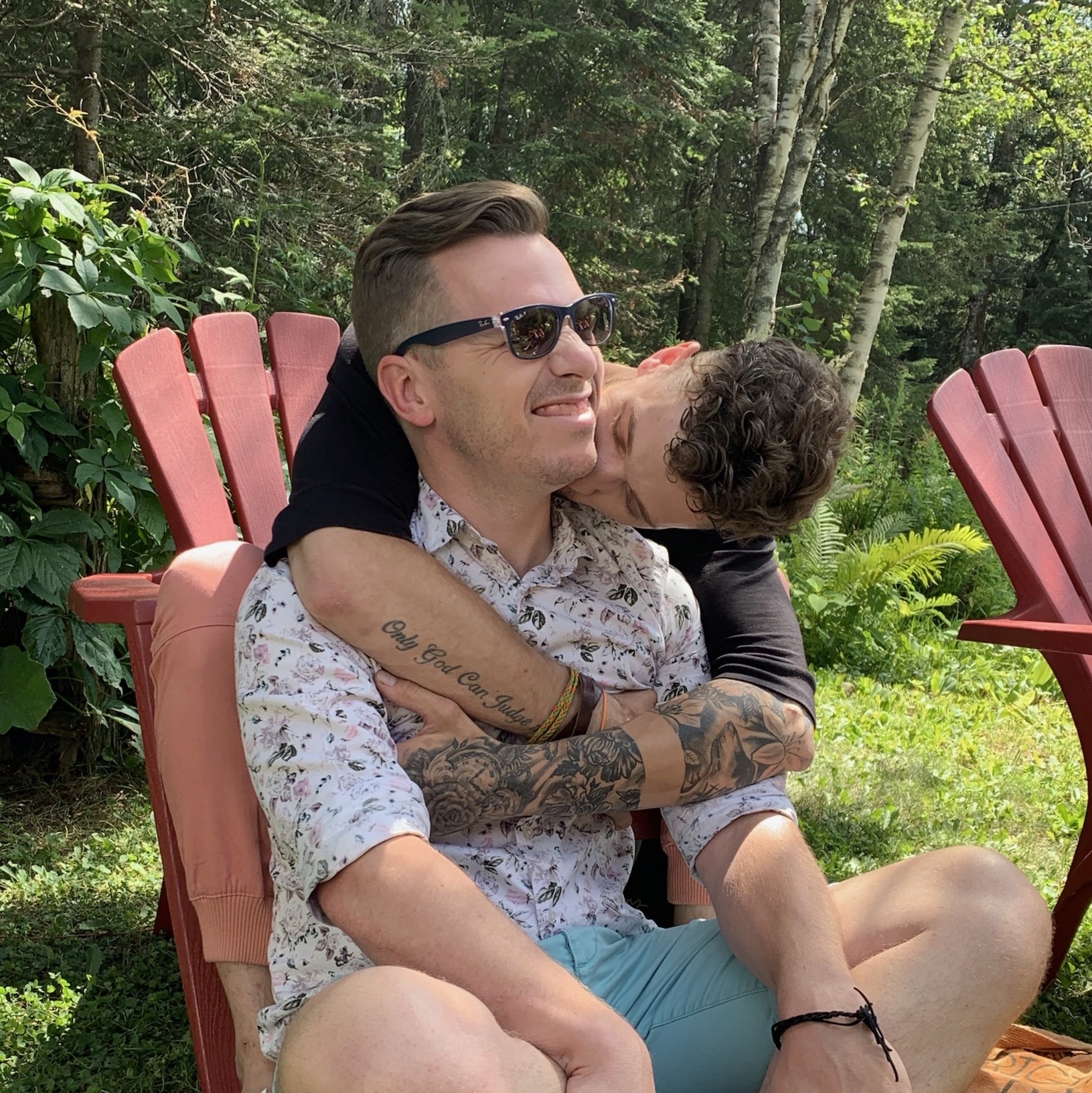
Two months later, Lee met Charles-Eric – the person who would become the great love of his life.
Letting someone into his world after a lifetime of self-doubt and internalized homophobia felt incredibly liberating.
“The first time I introduced him to my parents, he bolted out of the car, shook my dad’s hand…and I just saw my dad look at him and smile,” Lee shares. “In that moment, a lifetime of shame, anxiety, guilt – all of it melted away. The weight had lifted.”
It was, as he described it, “a beautiful gift.”
The lasting impacts of mental illness – when struggle hides in plain sight
For Lee and Charles-Eric, the early days of their relationship appeared stable, hopeful. Even ordinary. In hindsight, mental illness and addiction were quietly taking hold.
As Charles-Eric prepared to open a restaurant, his stress manifested in ways Lee didn’t fully understand, attributing the changes to fatigue and pressure rather than something more serious.
“I assumed he was just tired. Cranky. Irritable because he was opening a restaurant,” Lee says.
After the restaurant opened, Charles-Eric shared that he was struggling with addiction. The shame, fear and anxiety of carrying both illness and secrecy had begun to consume him.
Soon after, he entered rehabilitation.
“I remember seeing the light in his eyes again,” Lee recalls. “My person was back. And I felt so guilty for not knowing how deep the struggle had become.”
After rehab, Lee and Charles-Eric also both actively sought therapy and support. Together, they came to understand that Charles-Eric’s use of substances was one of the ways that he was coping with an undiagnosed mental illness.
Charles-Eric made a full transformation, leaving the restaurant world behind and moving into landscaping – work that gave him energy, joy, and freedom from past triggers. For more than a year, hope had returned.
Together, Lee and Charles-Eric built a new kind of normal – one shaped by appointments with doctors and psychiatrists, therapy sessions and long conversations about how to live life one day at a time.
With a diagnosis, it became clear that Charles-Eric’s experiences and struggles with addiction were part of a much larger, more complex battle with mental illness. “We built routines. We had medication. Therapy. A beautiful period together,” Lee says. “I saw the path forward. I saw our future. And in my mind, it was always going to be with him.”
But despite having a strong support system in place, Charles-Eric’s illness, and the challenges associated with it, persisted.


When advocacy becomes purpose instead of choice
Charles-Eric died by suicide after a night spent awake and overwhelmed by his illness.
The final text message Charles-Eric sent Lee that morning simply read: “Baby, I’m exhausted.”
Within hours, their shared plans, trips, milestones, futures imagined together – were gone.
Loss like this is permanent.
“I didn’t become an advocate deliberately,” Lee shares. “I’ve become fierce in my advocacy because the most important person in my life deserves better. The stigma around suicide is still tough to navigate. I know there would be less suicide if there was less stigma.”

I know there would be less suicide if there was less stigma.
Moving forward
Today, Lee lives two truths at once: he experienced a love that changed his life and holds grief that has completely reshaped it.
“I’ve learned the importance of holding my grief for the great love I lost forever,” he says. “The loss of my great love is something that I will never get over and I would give anything to have him back.”
Lee shares his story in hopes to eliminate stigma, help increase access to life saving care for those who need it, as well as better support for those who have loved ones that are struggling.
Lee’s testimony exists so fewer futures are lost and fewer loved ones are forced to become voices for change after tragedy leaves them with no other choice.


More than a number
Every life lost to suicide is more than a number. It is a person with a history and a future. Lee’s experience is one story among far too many – one family changed forever by a devastating loss. At The Royal, we are working to ensure fewer families endure this kind of loss.
Through critical research, evidence-based treatment, and continuous innovation, we strive to prevent these tragedies before they occur. Our teams are advancing suicide-prevention research, identifying early warning signs sooner, and developing early-intervention strategies that help people get the right support, at the right time. Each step forward means fewer stories like Lee’s and more lives reclaimed. We work so that his story – and Charles-Eric’s life – are not added to a long, tragic list.
Twelve Canadians die by suicide every day. Depression will be the world’s largest medical crisis by 2030.
There is a critical need for cutting-edge research in suicide prevention. The Royal is bringing us closer to a future without suicide. Donate today to help advance this essential work.