
Seeking solutions for treatment-resistant depression
The Royal’s Neuromodulation Research Clinic is dedicated to advancing the treatment of difficult-to-treat depression through innovative neuromodulation therapies, with a primary focus on repetitive transcranial magnetic stimulation, or rTMS.
By combining clinical care through The Royal's Neuromodulation Clinic with research and quality improvement initiatives, we are helping advance the field of neuromodulation while ensuring patients have access to the latest evidence-based approaches.
Neuromodulation research is helping us to understand mental illness as a ‘brain circuitry’ disorder, just as earlier research into drug therapies helped us understand the ‘chemical imbalance’ aspects of mental illness. Through this understanding, researchers are opening the doors to a whole new realm of non-invasive, alternative treatment possibilities.
Through both clinical care and research, we are working to expand access to effective neuromodulation therapies and improve outcomes for a broader range of mental health conditions.
rTMS acts by directly stimulating specific brain circuits known to be involved in depression. This is done by producing a brief magnetic field applied directly over the scalp to modulate brain activity. When delivered repeatedly over time, this treatment can change the activity of brain circuits through a process called neuroplasticity.
By integrating imaging data with rTMS therapy, we have been able to optimize stimulation parameters, leading to more effective and targeted interventions for patients, offering a non-invasive, evidence-based option.
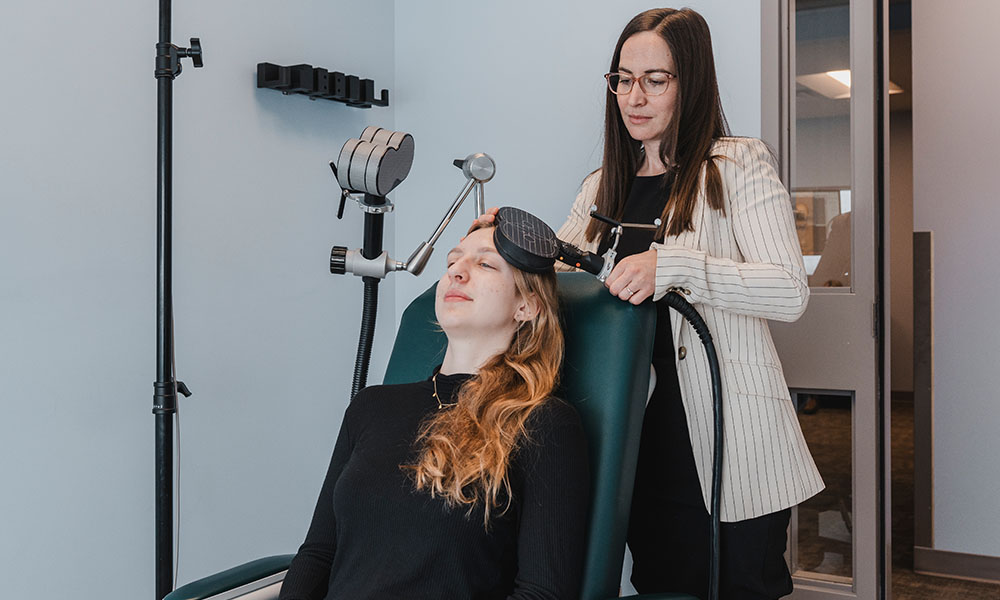
Explore ongoing clinical trials
rTMS clinical trials harness state-of-the-art neuroimaging technologies available at The Royal’s Brain Imaging Centre to better understand how this therapy modifies brain circuitry, in order to more effectively personalize treatment.

Support research
Donations are essential to the advancement of mental health research and the discovery of new, more impactful treatments for mental illness.
