
Michael Fisher spent a lot of time walking.
The fourth floor, then the third. Around the perimeter of the hospital, again and again—sometimes ten times a day. There was a lot of time to fill, and not much room to go anywhere else. During COVID, even the small freedom of exercise disappeared, so he turned inward instead. He picked up a pencil.
Art wasn’t something he set out to make meaning from at first. It was how he passed the hours. When medications made reading difficult and focus slipped away, drawing filled the space. Pencil on white paper. Graphite. Quiet lines forming when words wouldn’t. One day he sketched a portrait of George Webber. It wasn’t perfect, he’ll tell you—but George was chuffed, and that was enough. The act of making something, anything, anchored the day.
Over time, the drawings began to carry more than time. While Michael was in hospital, several relatives passed away. Grief settled in alongside illness, heavy and unavoidable. One piece he created during that period shows a grave rising up to meet him, the earth curved beneath his feet. The figure in the drawing is bent and broken—but there is light at the end of the tunnel. The road curves back toward home. Looking at it now, he sees it as a record of where he was: wounded, yes, but still moving forward.
That’s the work he’s chosen to give back.
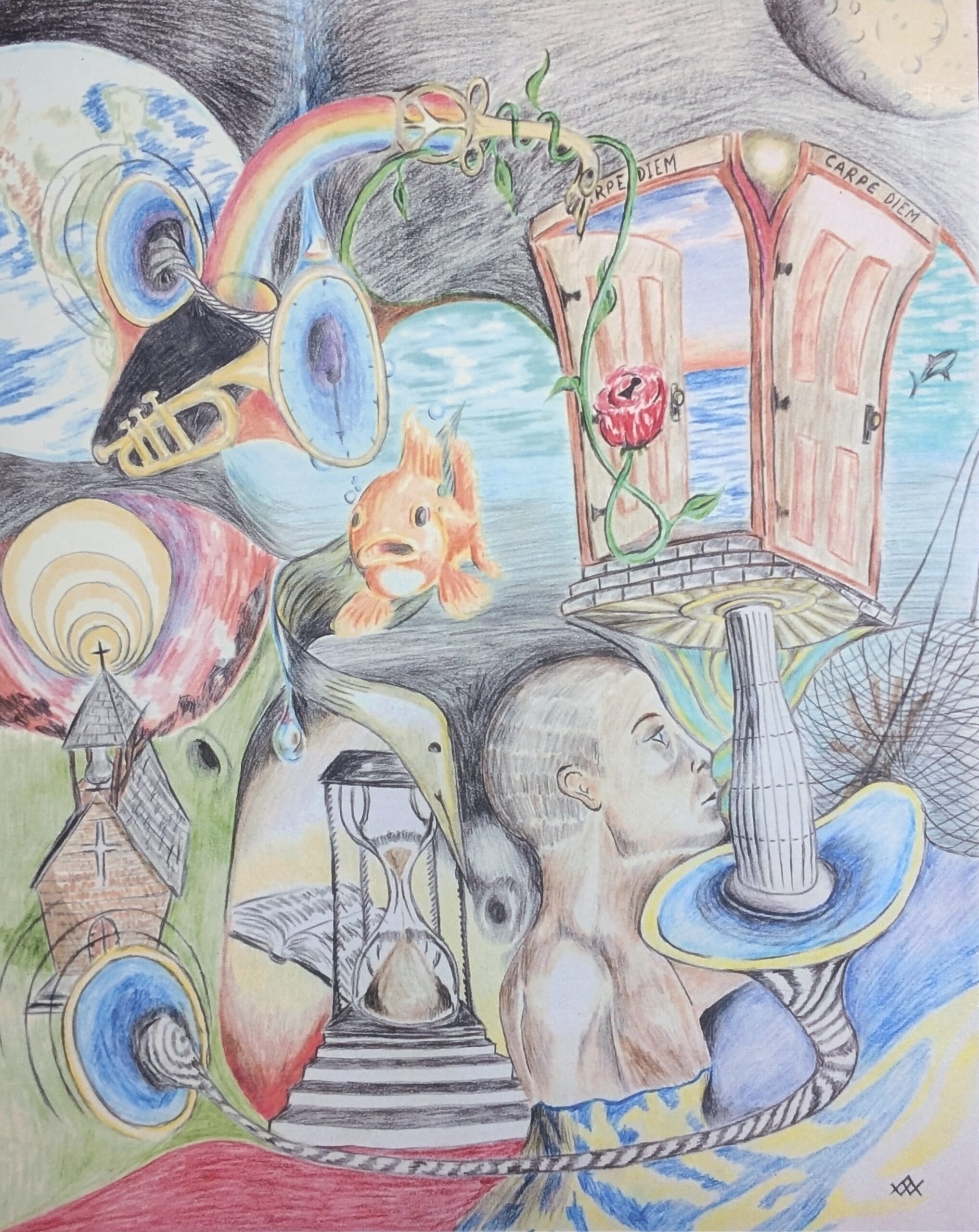
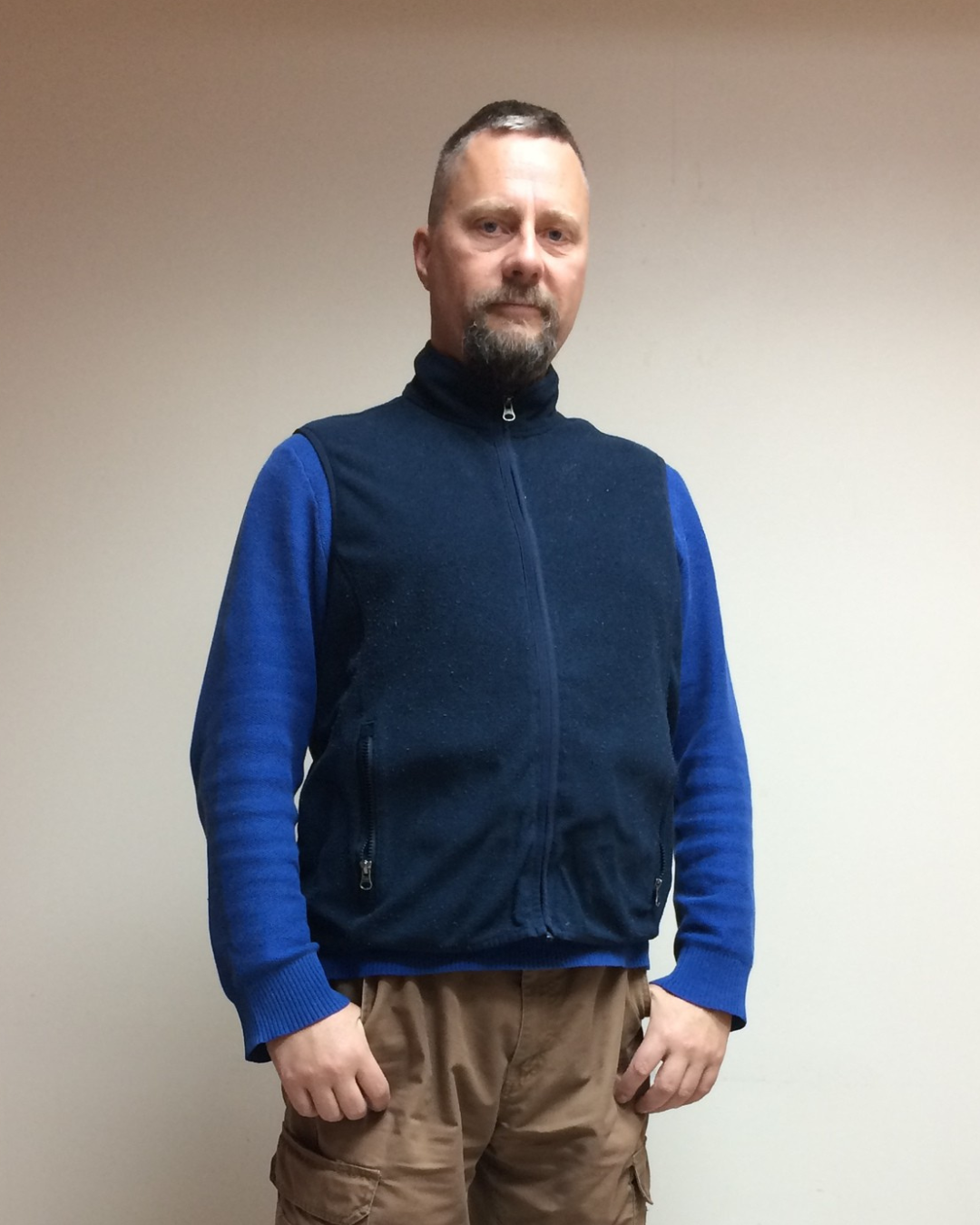
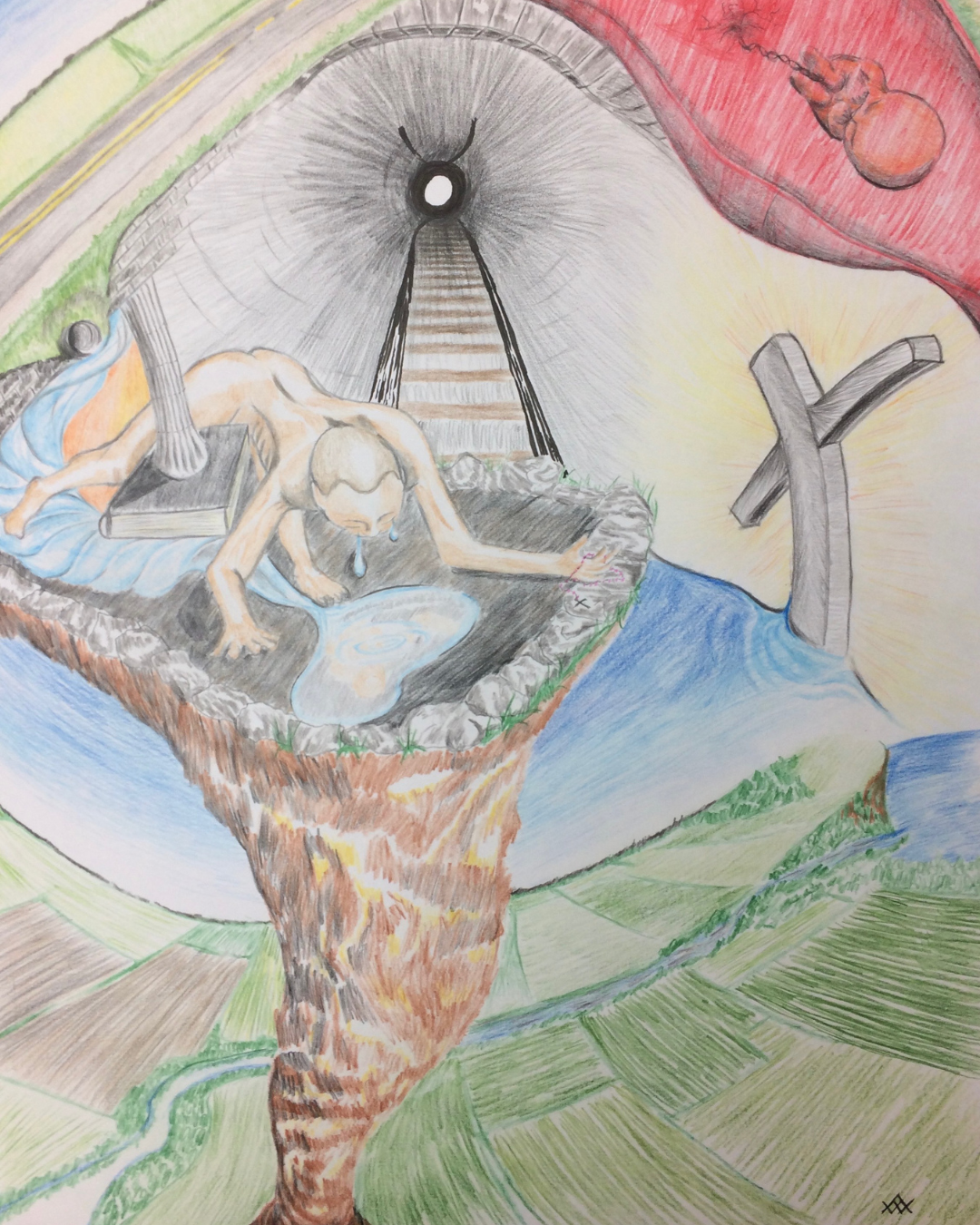
He’s donating three Bristol board pieces to the hospital that cared for him—art made in hallways and quiet rooms, during days that felt endless. They will hang near the chaplain’s space, a place where people already come carrying questions, grief, and hope. Michael’s own Christian faith has long been his strength and guiding force, and he hopes that those seeking comfort in the chaplain’s space might see his artwork displayed there and feel less alone. That they might understand that hard work—showing up, creating, surviving—can slowly lead to a deeper understanding of yourself. That even here, especially here, something meaningful can take shape.
There are more pieces too, prints kept carefully in his portfolio. Michael hopes to donate those as well, extending the story beyond these walls.
As his life draws toward its close, he thinks about legacy—not as fame or perfection, but as truth. He wants people to remember that not everyone who struggles is malicious. Some are raised in difficult circumstances, shaped by poor influences, bent by things beyond their control. And still, there is always a choice. Like a phoenix, you can rise—changed, wounded, but alive.

His art is proof of that growth. Lines drawn in a hospital corridor. Light found at the end of a tunnel. A quiet gift left behind for whoever needs it next.
And for those who feel broken or confused, Michael wants them to remember that even small acts of creating or shaping the world around you can bring reassuring order to chaos—one step at a time.
