
One year after a landmark $1 million investment from Brain Canada matched by $1 million in philanthropy, The Royal’s Brain Imaging Centre is transforming how we study mental illness and addiction, bringing us closer to a future where people receive the right treatment at the right time.
The funding established the Advanced Multi-modal Neuroimaging Platform for Psychiatry (BIC-AMPP), the first research platform of its kind in Canada and one of only three in the world. By combining three powerful brain imaging technologies, MRI, PET and EEG, researchers can study the brain’s structure, function, chemistry and electrical activity at the same time, creating an unprecedented view of how mental illness affects the brain.
“The Brain Imaging Centre has become Ottawa’s hub for advanced brain and heart imaging, bringing together exceptional technology, scientific expertise and clinical research from across our region, Canada and beyond,” said Dr. Florence Dzierszinski, President and CEO, The Royal’s Research Institute. “With this next generation of imaging capability, we can see and study the brain — and the connections between brain and body — with extraordinary precision, accelerating discoveries that will ultimately help us understand mental illness and addiction more deeply and get the right treatment to the right person at the right time.”
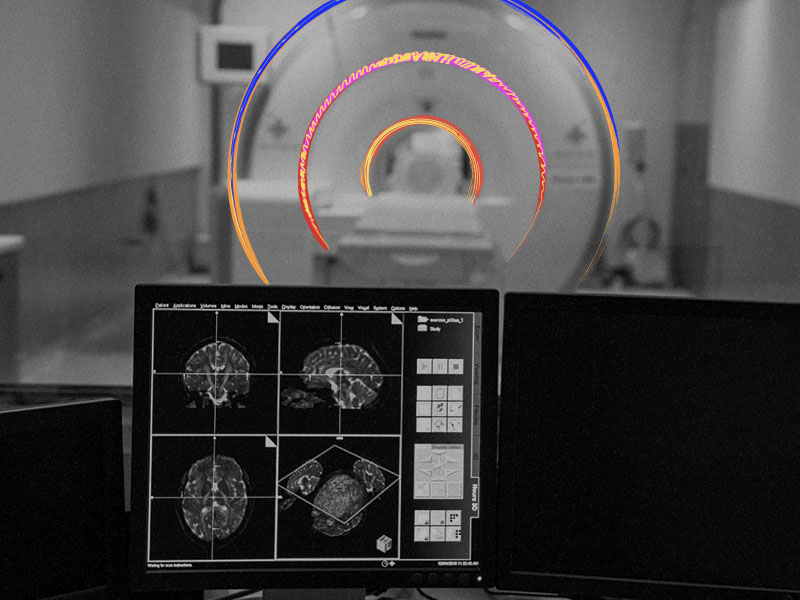
Despite recent medical advances, mental health care still lacks many of the objective tests that help clinicians diagnose conditions and personalize treatment. As a result, finding the right treatment can take months of trial and error. Researchers at The Royal are working to change that.
“Mental illness and addiction are incredibly complex,” said Dr. Jennifer Phillips, Scientific Director of The Royal’s Research Institute. “This platform allows us to ask questions and generate insights that simply weren’t possible before.”
By bringing together insights from multiple brain imaging technologies, BIC-AMPP is helping scientists better understand why treatments work for some people but not others. The goal is to develop more personalized approaches to care and identify new therapeutic targets that could lead to future treatments.
“For conditions like depression, people can spend weeks or months trying treatments that may not work for them,” said Dr. Phillips. “We want to understand what’s happening in the brain so we can better match people with the treatments that are most likely to help them.”

A new brain imaging scanner
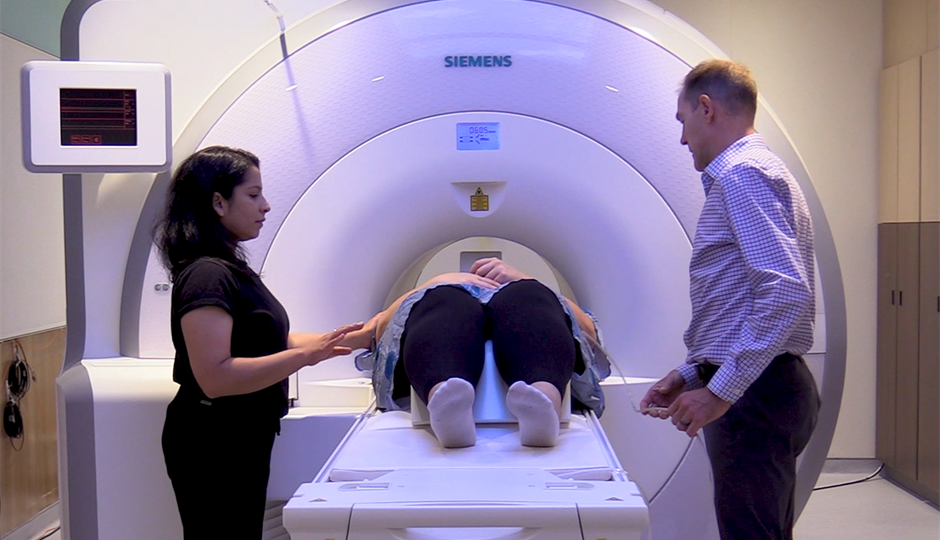
Core to The Royal’s multi-modal imaging capability is its cutting-edge technology. Its Siemens Biograph mMR scanner is one of only a handful of simultaneous PET-MRI scanners in Canada. This scanner has been instrumental in attracting research talent, enabling landmark studies, supported by government and philanthropic investments.
This fall, The Royal will be upgrading its current scanner to the brand-new Siemens Biograph One. The technology will further strengthen the Brain Imaging Centre's position as a global leader in brain and mental health research, giving scientists and clinicians an even more powerful tool to study the brain in unprecedented detail.
The new scanner will produce higher-quality images in less time, making studies more efficient while improving the experience for research participants. By capturing more detailed information about brain structure, function and biology, researchers will be able to explore new questions and accelerate discoveries that could lead to better diagnostics and treatments.
The scanner will play a key role in advancing clinical research programs across The Royal, including interventional psychiatry and brain imaging-guided neuromodulation studies.
About The Royal’s Brain Imaging Centre
Since opening in 2016, the Brain Imaging Centre has been central to The Royal's identity as a research-intensive hospital. With more than 6,500 scans completed over 10 years, the facility has enabled groundbreaking work spanning mental health, addiction, aging, neuroscience, and brain-body interactions.
The Brain Imaging Centre has supported more than 125 trainees including master's and PhD students and postdoctoral fellows. More than 40 papers using BIC data have been published, many in high-impact journals including Neuroimage, Biological Psychiatry, and the Proceedings of the National Academy of Sciences. This year, the BIC became a University of Ottawa Core Facility, serving 42 scientists and clinician scientists across the Ottawa Academic Health Network.
With the addition of a new PET-MRI scanner and expanded expertise, the Brain Imaging Centre is poised to make even greater discoveries.
None of this progress would be possible without the support of grants and generous donors. Together, these investments are accelerating research toward a future where mental illness can be understood with greater precision, treatments can be tailored to each individual, and more people can reclaim their lives sooner.
About The Royal
The Royal is one of Canada’s foremost mental illness and addiction treatment, research, and education hospitals, dedicated to supporting individuals aged 16 and older who are living with complex mental illness and addiction. Since opening in 1910, The Royal has grown into a trusted resource for people across eastern and northern Ontario, western Quebec and Nunavut.
With campuses in Ottawa and Brockville, and clinical teams working directly in homes and communities, The Royal delivers compassionate, evidence-informed care grounded in cutting-edge research, including through its partnership with the University of Ottawa and other academic and community partners. Its integrated model brings together care, research, education and strategic partnerships to help build a future of recovery.
At The Royal, we separate the person from the illness, helping more people reclaim their lives.
Media contact
For more information or to secure an interview, please contact Alyssa Nader, Communications Specialist, The Royal, anader@theroyal.ca.
