
Menu
The Royal has a long history of offering high quality, accredited Psychology residency training across its various clinical programs.
The Royal’s residency program has evolved from a consortium with The Rehabilitation Centre (until 2005) and was accredited by the Canadian and American Psychological Associations (CPA and APA) in 2006 to span the period of 2005 (its inception) to 2013. A CPA accreditation site visit occurred in the summer of 2013. CPA re-accreditation was granted for a period of seven years from 2012-13 until 2019-2020. In the fall of 2019, we entered the CPA re-accreditation cycle. A site visit was scheduled for spring 2020 but was postponed due to the COVID-19 pandemic. A virtual site visit was completed in January 2021. In June 2021, the CPA granted The Royal a six-year reaccreditation term.
The Royal will be entering the CPA re-accreditation process in 2026-27.For more information on CPA accreditation, please contact the accreditation office. The CPA head office is located at 1101 Prince of Wales Drive, Suite #230, Ottawa, ON, K2C 3W7.
The Royal is located on the traditional territories of the Algonquin Anishinabe, Wendat, Anishinaabeg, Haudenosaunee Nation, and Mohawk nations.
The Royal is one of Canada’s foremost mental illness and addiction treatment, research, and education hospitals, dedicated to supporting individuals aged 16 and older who are living with complex mental illness and addiction.
Since opening in 1910, The Royal has grown into a trusted resource for people across eastern and northern Ontario, western Quebec, and Nunavut. With campuses in Ottawa (main and Carlingwood) and Brockville, and clinical teams working directly in homes and communities, The Royal delivers compassionate, evidence-informed care grounded in cutting-edge research, including through its partnership with the University of Ottawa and other academic and community partners. Its integrated model brings together care, research, education, and strategic partnerships to help build a future of recovery.
For the 2027-28 residency year, The Royal is offering four unique tracks with one position available (a total of four positions).
Each track represents the clinical program in which a resident will complete their primary rotation (two days/week for the duration of the year). Secondary rotations (two six-month rotations each one day/week) are assigned after the APPIC Match. Secondary rotation assignments are based on resident interest and the pool of available secondary rotations.
Secondary rotations will be available in the following clinical programs for the 2026-27 residency year:
*Flex time is to be used at the resident’s discretion, which can be used for work including Grand Rounds, didactic and experiential learning opportunities, hospital committee duties, or additional clinical work.
**Resident group day
Three Fridays a month are devoted to the following activities:
· Unscheduled work (i.e., additional flex time)
One Friday each month is an “unscheduled work day” which can be used for various clinical, program development and evaluation project, didactic and experiential learning opportunities and/or professional development/educational activities.
Residents receive a stipend of $45,000.00 per annum that includes:
* Professional development leave can be used for various activities including dissertation work or meetings, attending workshops or conferences or other professional development activities.
This stipend is subject to employment insurance and tax deductions. Canadian residents have provincial health benefits. Basic Ontario Health Care Insurance requires three months of residence within the province of Ontario prior to taking effect. Extended health care benefits covering prescription drugs, dental, vision and paramedical coverage are the responsibility of the Resident.
Residents are required to obtain professional liability insurance. Liability insurance coverage provided by academic institutions is accepted.
Please note: Successful residents will be required to have a clear Police Record Check (for the Vulnerable Sector) dated within six months of the residency start date. Any new hires at The Royal (including Psychology Residents), prior to their first day of employment, will be required to provide proof that they have been fully vaccinated, or present supporting documentation of a valid exemption in accordance with the Ontario Human Rights Code. Employment at The Royal will be subjected to the above police record check as well as the occupational health and safety requirements.
In addition, to ensure the pace of resident workload promotes quality learning experiences, one Friday per month is considered an “unscheduled work day” which residents may use this time to work on various clinical training activities, complete readings related to rotations, program development and evaluation project, or catch up on rotation-specific workload (e.g., documentation, chart review).
The Royal is welcoming applications to the following four tracks for the 2026-2027 residency year:
Applicants are welcome to apply to as many tracks as they would like, indicating their tracks of interest in one cover letter (please do not include your rank order preference of tracks).
Applications should include:
The Royal’s Predoctoral Residency Program in Clinical Psychology is committed to fostering an equitable, accessible, and inclusive environment. As such, applicants who require accommodations during the interview process are invited to connect with the Director of Training.
All positions in The Royal’s psychology residency program are filled in accordance with the Association of Psychology Postdoctoral and Internship Centers' (APPIC) process and policies. Our residency program agrees to abide by the APPIC policy that no person at this training facility will solicit, accept or use ranking-related information from any applicant

If you have further questions, please review our frequently asked questions below. If you still can’t find what you’re looking for, please contact Dr. Jacky Chan, Director of Training at The Royal at jacchan@theroyal.ca.
The only required forms are the APPIC application and the cover letter. Please see the section on the Application Procedure for information required in the cover letter.
A multi-step review and ranking process is used.
First, we review all applications to ensure all eligibility criteria are met.
Second, a pair of raters (comprised of Psychology faculty and current residents) rate the written application and assign it a numeric score (based on specific criteria and fit to our program). All applications are then rank-ordered based on the assigned score. This ranking determines who will be invited for an interview.
Third, applicants are invited for an interview. For the 2027-28 APPIC cycle, interviews will be completed January, 2027. Details are outlined in the brochure. Additional information about the interview process is located below. Standardized interviews are conducted by a panel consisting of two faculty members and assigned a score. Applicants are then rank-ordered based on the score of their written application + the score of their interview and a final ranking list is developed and submitted to APPIC. Care is taken to ensure no conflicts of interest exist between assigned raters/ interviewers and applicants.
As per CPA standards, the minimum hour requirement is 600 hours, which must include 300 direct and 150 supervision hours.
As per the process noted above, if you are selected for an interview, you will be contacted by the residency program coordinator on December 4, 2026. Interviews scheduled for January 2027 will be conducted virtually by a panel consisting of two faculty members. We make every effort for applicants to be interviewed by training faculty who represent tracks and rotations of interest. The interview day for January 2027 also includes a virtual orientation session provided by the Director and/or Assistant Director of Training, and a virtual meeting with current residents. Applicants are also invited to attend optional virtual “open houses” hosted by primary track supervisors to learn more about their clinical programs and ask questions. There are also opportunities to speak to other training faculty and former residents outside of the interview process.
At a minimum, residents receive four hours of supervision per week from Registered Clinical Psychologists. Individual supervision includes face-to-face supervision, and on some rotations, may be complemented with group supervision. Supervision occurs each week in both primary and secondary rotations. In accordance with CPA accreditation standards, up to 25% of residency supervision may be asynchronous.
Each of the four tracks at The Royal represents the clinical program in which the matched applicant will complete their primary rotation. Secondary rotations are assigned after the APPIC Match and are based on Resident interest and the pool of available secondary rotations.
Supervisors for primary rotations (tracks) will be identified prior to the January 2027 interviews. This information will be available to applicants at that time. As stated above, secondary rotations and supervisors will be assigned after the APPIC Match and are based on Resident interest and supervisor availabilities.
There is discussion with the Resident and both primary and secondary Supervisors to see what days (Monday-Thursday) have the most requirements for residents (e.g., team meetings, groups) in each rotation. Residents are encouraged to set aside Mondays for the program development and evaluation project and flex time to avoid missing clinical rotation time on holiday Mondays. Therefore, with recent cohorts, the majority of direct clinical contact has occurred on Tuesdays through Thursdays. Fridays are dedicated as non-clinical days, and include seminars, group supervision, and program admin.
During the orientation process, residents will be together each day. Following this two-week period, residents will typically spend each Friday together (virtual or in-person).
Some residents are together in a specific rotation and may have more contact with one another. Residents also have the opportunity to come together with other residents from Ottawa residency programs through monthly Citywide/ CCPPP seminars.
Program development and evaluation experience is increasingly a requirement in the job market and many of our graduates tell us that they used the skills gained on residency in their employment. The program development and evaluation project is flexible across the range of evaluation methodologies (such as needs assessments, program development and formative or summative evaluations) to fit Residents’ interests. Most Residents do not come with formal program development and evaluation experience but are provided didactic seminars and ongoing supervision to develop the projects, evaluate the report, and guide its dissemination. Common components of the project include meetings with stakeholders, producing a written report, and engaging in additional dissemination activities.
Residents complete program development and evaluation research projects in pairs (or small groups of three depending on cohort class size).Various topics are provided by the program at the beginning of the year. Time is dedicated towards working on the project on residents’ flex day.
The Royal has two main campuses—one in Ottawa and one in Brockville. The main Ottawa campus at 1145 Carling Avenue houses most programs. Residents working at the main campus will be required to pay for parking. The main campus is accessible by the city’s public transportation OC Transpo.
The Carlingwood campus, located at the Carlingwood Shopping Centre in Ottawa (located 4 km west of the main campus) houses the Community Mental Health Program, the Transitional Aged Youth service, and other services. Residents working out of the Carlingwood campus can use the shopping centre parking lot at no additional cost. The Carlingwood campus is also accessible by OC Transpo.
The Royal’s Brockville campus is located at 1804 Highway 2 East (approximately one hour drive from the Ottawa main campus). The Brockville campus primarily houses the Forensic Treatment Unit and the Secure Treatment Unit of the Integrated Forensics program, along with other services. Residents working at the Brockville campus will have access to free parking.
Residents each have their own office at The Royal’s main campus. Each resident office is equipped with a laptop a webcam, an ergonomic height adjustable desk and an ergonomic chair. Residents working at satellite sites may be assigned a shared office/cubicle space within that program’s location, with access to private spaces for assessment and intervention activities as needed.
The Royal strives to be an inclusive workplace accommodating the diverse needs of staff and volunteers, with physical accommodations such as accessible gender-neutral washrooms, barrier-free parking, and elevators being in place. As part of the onboarding process, Residents will work with the Occupational Health & Safety Services team to identify their unique accommodation needs and to receive ongoing support to have these accommodations (e.g., assistive technology and tools, physical space adjustments, modifications to job tasks) be put in place. The option to receive an ergonomic assessment is available to all Residents in order to optimize their work environment. Access to additional assistive technology and tools are available for accommodation purposes (in consultation with The Royal’s Occupational Health and Safety Services and the Information Technology departments).
In addition to clinical activities in the primary and secondary rotations, Residents are required to complete a program development and evaluation project, participate in a hospital committee, supervise a student, deliver a Resident Seminar and a Grand Rounds presentation, and attend seminars.
Residents are provided with an individualized training plan to track their learning goals and training activities related to the development of their foundational and functional competency in clinical psychology. Residents will work closely with their primary and secondary rotations supervisors as well as Director and Assistant Director of Training at the beginning of the year to plan how these training and professional development objectives will be met throughout the year.
Aside from program development and evaluation project, there are no research-oriented requirements in The Royal’s residency program. Most Residents find the activities they engage in to fulfill the residency requirements keep them sufficiently busy within a typical workday and work week. There is no expectation that Residents work more than 37.5 hours per week. If Residents have time in their weekly schedules, or choose to work more than the typical workday/work week, opportunities to engage in research activities may be available.
While the number of residents who choose to work at The Royal after their residency varies from year to year, it is most often the case that one or two Residents stay at The Royal post-residency. Of course, many residents choose to return to their home province for post-residency ventures, to begin work in private practice, choose academia, or to work in other institutions like The Royal.
As the capital of Canada, Ottawa is a city full of culture. Ottawa is a vibrant metropolitan area, with rich ethnic, linguistic, and religious diversity. This is reflected by its multicultural neighbourhoods, cuisines, arts and culture, and annual celebrations such as Odawa Powwow, Capital Pride, Festival Franco-Ontarien, and the Ottawa Lebanese Festival. During the summer, the city is famous for its numerous festivals, including the Tulip Festival, Bluesfest, Folkfest and the Dragonboat Festival. During the winter, Winterlude is a main attraction, as well as the Rideau Canal Skateway (the largest outdoor rink in the world!). Residents have appreciated the connection to Canadian culture through numerous museums and cultural sites, as well as Parliament Hill. Visit the City of Ottawa website for more information.
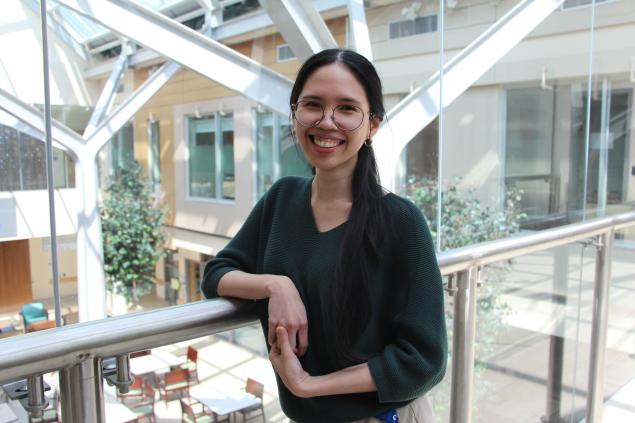
Karianne is a doctoral candidate in Clinical Psychology at the University of Ottawa. She is completing a primary rotation with the Operational Stress Injury Clinic, and secondary rotations in the Community Mental Health Program and the Adult General Psychiatry Program.
Her dissertation research explores the intersection between sleep, mental health, and technology. Specifically, her studies focus on the use of sleep trackers in Canada and their potential integration into clinical practice. Her work also examines adaptations to cognitive behavioural therapy for insomnia, particularly in the context of co-occurring psychological disorders such as depression and post-traumatic stress disorder.
While at The Royal, Karianne is looking forward to developing skills in trauma-focused interventions (e.g., CPT, PE), refining her assessment abilities particularly with mood and anxiety disorders, gaining broader experience in community-based settings, and shaping her identity as a clinical supervisor.
Talia Leibovitz is a doctoral candidate in Clinical Psychology at University of Toronto Scarborough. She is completing a primary rotation with the Adult General Psychiatry Program, and secondary rotations in the Ontario Structured Psychotherapy Program and Community Mental Health Program.
Her dissertation research quantitatively examined effects of self-esteem on psychotic symptoms in the context of cognitive behavioural therapy for psychosis. She also investigated the contribution of self-critical rumination and metacognitive beliefs about self-critical rumination to low self-esteem in psychotic disorders.
While at The Royal, Talia is looking forward to build upon her clinical experience providing evidence-based psychotherapy for individuals with bipolar, anxiety and mood, and trauma and related disorders, as well as refining her skills in diagnostic assessment for complex clinical presentations.
Aiden Mehak is a doctoral candidate in Clinical Psychology at McGill University. They are completing a primary rotation with the Community Mental Health Program, and secondary rotations in the Ontario Structured Psychotherapy and the Transitional Aged Youth Programs.
Their dissertation research examined the cognitive and affective mechanisms influencing the experience of the eating disorder maintenance factor, feeling ‘fat’ using biopsychosocial methods.
Aiden is looking forward to expanding their assessment and therapeutic skills working in a community setting and deepening their experience working with members of equity-deserving groups. They are excited to refine their competency in trauma-focused therapy and gain more experience working on multidisciplinary teams.
Danielle Uy is a doctoral candidate in clinical psychology at Toronto Metropolitan University. She is completing her primary rotation in the Mood and Anxiety and Ontario Structured Psychotherapy programs. Her secondary rotations are in the Substance Use and Concurrent Disorders Program (TAY Service) and the Community Mental Health Program.
For her dissertation, Danielle is investigating psychosocial predictors of internet gaming disorder using both survey and experimental methods. She is especially interested in understanding the role of behavioural engagement in nongaming activities in predicting symptom severity and craving in a sample of adult video game players who spend significant amounts of time gaming per week.
For her residency, Danielle is looking forward to learning more about tertiary mental health care and the different roles that psychology can fill in hospital settings (e.g., consultants, supervisors, program evaluation researchers). She is also excited to hone her skills in treatment and assessment, particularly within the context of treatment-resistant illnesses, multiple comorbidities and other complexities in adult populations. With respect to presenting concerns, Danielle is interested in working with clients presenting with mood, anxiety, OCD, trauma, emotion dysregulation and concurrent disorders.
1145 Carling Ave.,
Ottawa, ON K1Z 7K4
(613) 722-6521
1141 Carling Ave.,
Ottawa, ON K1Z 7K4
(613) 722-6521
1804 Highway 2 E, P.O. Box 1050,
Brockville, ON K6V 5W7
(613) 345-1461
2121 Carling Ave.,
Ottawa, ON K2A 1H2
(613) 722-6521

We use cookies to improve your experience on our website. To learn more, read our privacy policy.